One of the most common things I hear from new clients, usually while they are still settling into the chair at my practice in Laren, is a quiet confession: “I am not sure why, but I already feel emotional.” Before the session has even started, something inside them has begun to stir.
Crying during hypnotherapy is far more common than most people expect. It is not a sign that something has gone wrong. In most cases, it is the opposite.
- Tears during hypnotherapy are a natural release, not a sign of distress.
- The subconscious stores emotions the conscious mind has long pushed aside.
- Crying often marks the moment a deep emotional pattern finally begins to shift.
- Most clients describe feeling lighter and clearer after an emotional release in session.
What the Body Holds That the Mind Forgets
In everyday life, we learn to manage emotions. We push things aside, we keep going, we tell ourselves we are fine. Over time, those unfelt emotions do not disappear. They settle into the body and the subconscious.
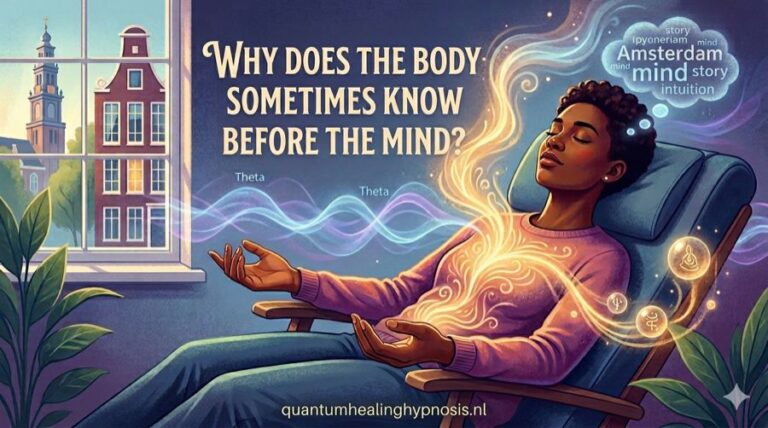
During a QHHT session, when the conscious mind steps back and the subconscious takes over, those stored emotions can surface. I have seen clients begin to cry within minutes of entering a deep state, often without knowing why. The tears come before any memory or image appears. The body remembers first.
Something I often notice is that clients who describe themselves as “not emotional” tend to have some of the most powerful releases. It is as though the subconscious has been waiting for a safe moment to finally let go.
The Difference Between Pain and Release
There is an important distinction between crying from pain and crying from release. In a session, the tears almost never come with suffering. Clients describe it more like a wave passing through them. Something loosens. A weight lifts.
I sometimes compare it to what happens when you feel a shift before anything outwardly changes. The emotional body begins to reorganize itself. Crying is simply part of that process.
Research on emotional processing during QHHT and other forms of deep hypnotherapy supports this. The theta state allows access to memories and feelings that are normally filtered out by the waking mind. When those filters drop, emotions flow freely.
Patterns I See in My Practice
After years of facilitating sessions near Amsterdam, I have noticed certain patterns around emotional release. People who come in with questions about relationships tend to cry during scenes connected to loss or separation. Those who carry unexplained physical tension often release tears when the subconscious reveals the emotional root behind it.
There is a pattern that surprises many clients: the tears are frequently connected to something beautiful, not something painful. A memory of deep love, a feeling of being truly safe, or a sudden connection to something larger than themselves. Clients sometimes tell me, “I was not sad at all. I just felt so much.”
This kind of release often mirrors what people experience during past life regression, where emotions from another time surface with startling clarity.
After the Tears
What happens after an emotional release is often the most meaningful part. Most clients sit up and say something like, “I feel so light.” That lightness is not imagined. When the subconscious finally processes something it has been carrying, the whole system recalibrates.
I always encourage clients to be gentle with themselves in the days that follow. The emotional work does not stop when the session ends. Some people continue to notice shifts for weeks, as the subconscious integrates what was opened during the session.
From my practice here in Laren, just a short trip from Amsterdam, I can say that the clients who allow themselves to cry freely during a session often report the deepest and most lasting changes. The tears are not something to fear or hold back. They are the sound of something finally being heard.