Most people who book a session with me have never been to Laren before. They ask about parking, about the train, about how long the walk from the station takes. These are practical questions, but they also hide a deeper one. When the mind has to worry about logistics, it struggles to settle into the quiet state a QHHT session needs. So I want to walk you through the journey, the way I would if we were speaking in person.
- Laren sits inside Het Gooi, about thirty minutes by car or an hour by public transport from central Amsterdam
- The calmest route is the train to Hilversum or Naarden-Bussum, followed by a short bus or taxi ride
- Arriving twenty to thirty minutes early gives the nervous system time to soften before the session begins
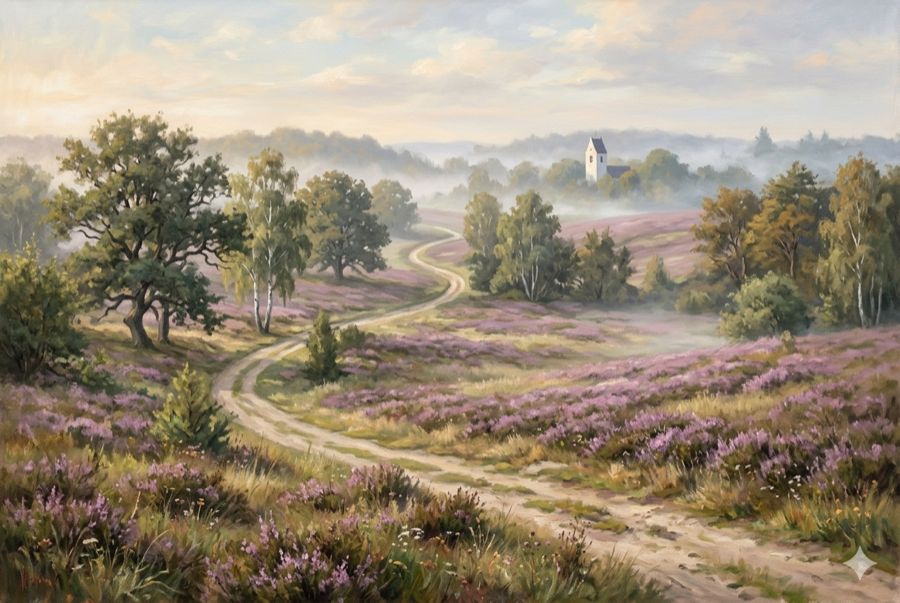
- The surrounding heathland and village streets offer a natural transition between city noise and inner stillness
- A small amount of pre-arrival planning lowers what I often see as the biggest obstacle to a deep first session, which is travel anxiety
The drive from Amsterdam to Laren
If you are driving from central Amsterdam, you will usually reach Laren in about thirty to forty minutes, depending on the time of day. The A1 is the main artery. I often suggest leaving with a generous cushion because the final ten minutes cut through village roads that slow everyone down, and that slowing is actually useful. The rhythm of Het Gooi is different from the city, and your body notices before your mind does.
Parking in Laren is straightforward. Most streets near the center have short-stay parking zones, and the residential edges of the village are free. Something I often see is that clients who drive arrive holding the posture of someone still in traffic. A few breaths in the car before stepping out shifts this more than they expect.
Train and bus from Amsterdam
There is no train station in Laren itself. The two closest are Hilversum and Naarden-Bussum. From Amsterdam Centraal, the train to Hilversum takes around twenty-five minutes, and from there a short bus ride or a taxi brings you into the village. You can check live schedules on the Dutch Railways site the evening before.
I have noticed that clients who take the train often arrive in a calmer state than those who drive. There is something about watching the landscape change through a window that quietly prepares the nervous system. If you are taking public transport for the first time and find the Dutch system unfamiliar, I recommend reading the general preparation notes a day or two ahead rather than on the morning itself.
When to arrive at the practice
A QHHT session lasts between four and six hours, and the first part of it is spent simply talking. Arriving twenty to thirty minutes early means you can sit in the waiting area, drink some water, and let your breathing slow. I would rather see a client fifteen minutes early and relaxed than ten minutes late and rushed.
In my experience, the single largest disruptor of a first session is not expectation or skepticism, but residual travel tension. The body holds the journey for longer than we realise. Arriving earlier gives you the chance to unwind that layer before we begin. Clients who arrive early and sit quietly tend to settle into the trance state more easily later on.
What the final stretch feels like
The last five minutes of the route, regardless of how you travel, pass through an environment that many first-time visitors describe as softer than they expected. The heathland, the tree-lined lanes, the pace of village life in Het Gooi. All of it works on the nervous system in a way that a person does not have to consciously notice for it to take effect.
Something I often see is that clients mention, afterwards, how the drive or walk into Laren was already part of the session in some way. They describe a shift that began before they sat down in my room. That is not accidental. The environment around a practice matters more than we usually credit. If you want a sense of what the room itself feels like, I wrote about that here.
A simple pre-arrival checklist
Before leaving for Laren, most clients find it helpful to have eaten a light meal, to have brought a bottle of water, and to have set aside enough time for the return journey as well. A session is mentally intensive, and driving home immediately afterwards is rarely the right choice. If you plan to travel back to Amsterdam the same evening, a short walk around the village first helps the transition. For more on what the hours after a session feel like, I cover that separately.
Laren is quiet. That quietness is part of why the practice is here, and part of why the work happens the way it does. Getting here is not complicated, but giving yourself the space to arrive gently is what makes the difference. If the logistics feel clear before you set out, the rest of the session has room to unfold on its own.