Clients travelling to my practice from further afield often ask for a more detailed route from Amsterdam Centraal, particularly if they are unfamiliar with the Dutch train and bus system. I want to lay out the full door-to-door journey here, with the practical details that usually matter on the day itself. The trip is simple, but knowing the shape of it in advance lets you give your attention to the session rather than to logistics.
- From Amsterdam Centraal, the most reliable route is by intercity train to Hilversum, then local bus or taxi into Laren
- Total door-to-door travel time is usually about sixty to seventy-five minutes
- Trains leave every ten to fifteen minutes during daytime, so exact timing is rarely tight
- The last segment, from Hilversum into Laren, passes through wooded suburbs that visibly soften the transition
- Leaving Amsterdam with a comfortable buffer, rather than a tight one, changes the quality of the session’s opening hour
Leaving Amsterdam Centraal
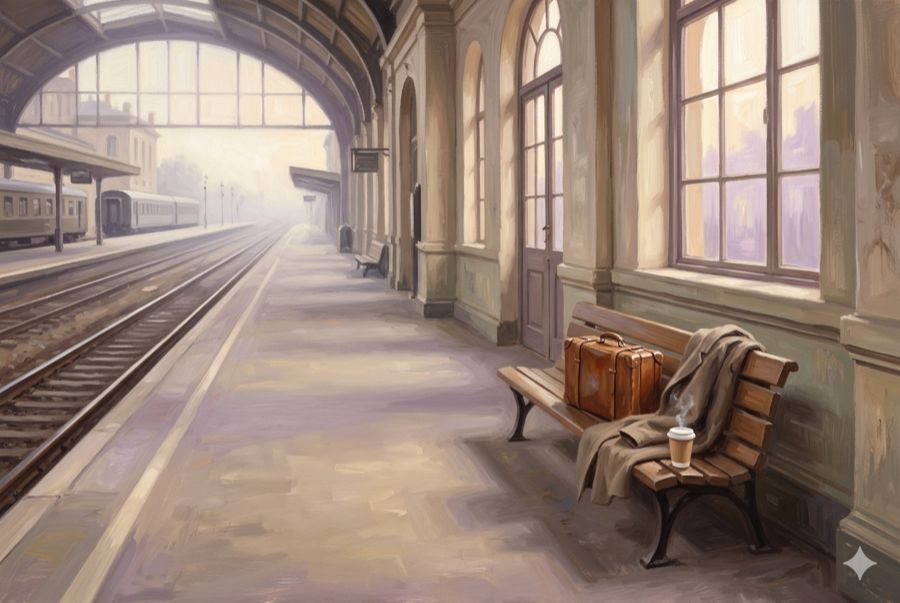
Amsterdam Centraal is large, but you only need two pieces of information to leave cleanly. The platform for intercity trains heading east toward Hilversum, and the departure time. Most trains to Hilversum leave from platforms 10, 11, or 15, and the clearest way to check is to use the Dutch Railways planner the evening before and again on the morning itself. The service runs every ten to fifteen minutes during daytime.
Buy your ticket from a machine or use a contactless card at the gates. If you are paying with a card, tap in at the yellow post before boarding and tap out at Hilversum. The ticket is straightforward, around nine euros one way. Something I often see is that clients who have never used the Dutch rail system before arrive at the station fifteen minutes earlier than needed, which is exactly right. That extra quarter of an hour is not wasted time. It is part of the settling.
On the train to Hilversum
The journey to Hilversum takes about twenty-five minutes on a direct intercity train. The route passes through open land, canals, and the outskirts of Hilversum itself. Sit on the right side of the train if you can, facing the direction of travel. The view out the window softens visibly once you leave the Amsterdam suburbs, and watching that transition is itself a useful thing to do before a session.
In my experience, clients who use the train time to read, or to look out the window, arrive in a different state than clients who spend it on their phone. The nervous system reads the landscape passing through, and it responds by slowing down. You do not have to do anything special. Simply not scrolling is enough.
From Hilversum to Laren
Hilversum station is smaller and easier to navigate than Amsterdam Centraal. Exit through the main hall and you will find a taxi rank immediately outside. A taxi to Laren costs around twenty to twenty-five euros and takes about fifteen minutes. For most first-time visitors this is the simplest option, particularly if you are carrying anything.
There is also a local bus that runs from Hilversum station toward Laren, which is roughly half the cost but adds about ten to fifteen minutes to the journey. The bus is pleasant in its own way. It moves slowly through wooded residential streets, and clients who choose it often describe the ride as part of the arrival. Either option works. The choice usually comes down to whether you value time or texture more on the day.
The last few minutes into the village
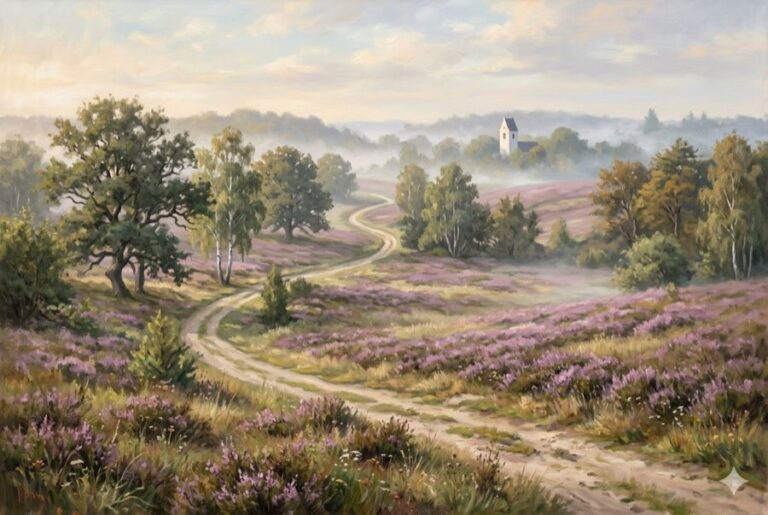
Whether by taxi or bus, the approach into Laren is visibly different from Hilversum. The roads narrow. Trees crowd closer. The pace of traffic slows. Something I often see is that clients arriving by this route comment on it as soon as they sit down in the practice. Their body has already registered the shift before they find words for it. I have written elsewhere about how the landscape around Laren participates in the session, and this final stretch is where that participation becomes noticeable.
Ask the driver or watch the bus stops for the centre of Laren. The practice is a short walk from there, and the final minutes on foot help the body finish the transition out of travel mode. If you have read the earlier post about getting here by car, many of the same notes apply.
Returning after the session
The return trip follows the reverse route, but I would ask you not to plan it tightly. A QHHT session in Laren lasts four to six hours, and afterwards the body and mind are in a slower rhythm than when you arrived. Do not aim to catch the first train. Allow an hour in Laren for a walk or a quiet tea before heading back to Hilversum. The transition back to Amsterdam should match the transition in, not compress it.
I also ask clients to avoid scheduling anything demanding for the evening that follows. A session is integrative work, and the hours after are part of it. I have described those hours in more detail separately. The short version is that a quiet train ride back to Amsterdam, with a book or simply the window, is one of the most supportive possible endings to the day.
A few practical items
Bring water, a light snack for the return journey, and warm layers. A QHHT session involves lying still for hours, and body temperature shifts during trance. You may feel cooler coming out of the session than going in. Wear comfortable clothes, ideally ones you would not mind travelling home in directly. And bring your written question list on paper, as I mentioned in the checklist post. Phones and screens do better in the bag during the travel day.
If any piece of the journey looks uncertain when you are planning it, send me a message ahead of time. Clients sometimes worry that a transport question is too small to ask. It never is. The goal is that by the time you sit down in my room in Het Gooi, the only thing in front of you is the session itself. Everything else should already be handled, so that nothing is.