A few years ago, a client drove to Laren from Utrecht for a session. It is not a long trip by Dutch standards, but she had considered working with a practitioner closer to home and had decided against it. Afterwards, she told me something I have thought about many times since. She said the drive had been part of why it worked. Having to come out to Het Gooi, past familiar roads and into quieter ones, had given the morning a shape that the session alone could not have created.
- Clients often travel from cities like Utrecht, Den Haag, Rotterdam, and Eindhoven for a QHHT session in Laren
- The drive itself, particularly the last twenty minutes into Het Gooi, is often described afterwards as part of the experience rather than an obstacle
- The unhurried quality of Laren village and the surrounding landscape supports a state the city cannot easily offer
- Many clients return a year or two later, and sometimes again after that, specifically because the setting is worth the journey
- The practical cost in time is modest compared to what the setting contributes to the session’s depth
A common route
From Utrecht, the drive to Laren is about forty minutes along the A27 and A1. From Den Haag it is around an hour. From Rotterdam, closer to ninety minutes. All of these are routine Dutch travel distances. What makes them worth considering is that the final portion of each route moves consistently from busier roads into quieter ones, from open motorway into residential streets lined with old trees.
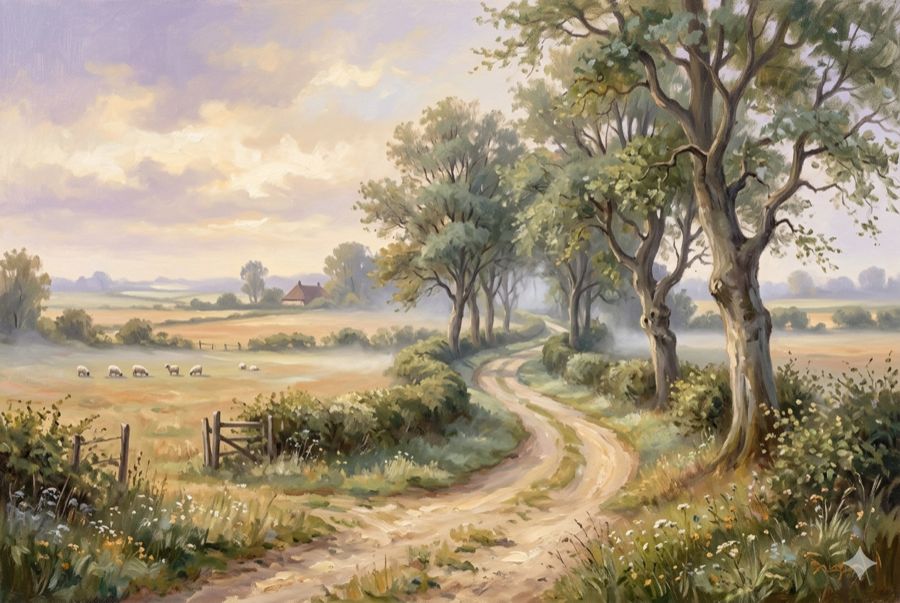
Something I often see is that clients who have made the drive describe the transition in their nervous system as visible. They can name the point where the traffic thinned, where the landscape softened, where they felt their shoulders begin to lower. This is not imagination. The body responds to environment faster than conscious attention tracks, and a drive that moves from busy to slow is a drive the nervous system reads as descending.
Why not simply find someone closer
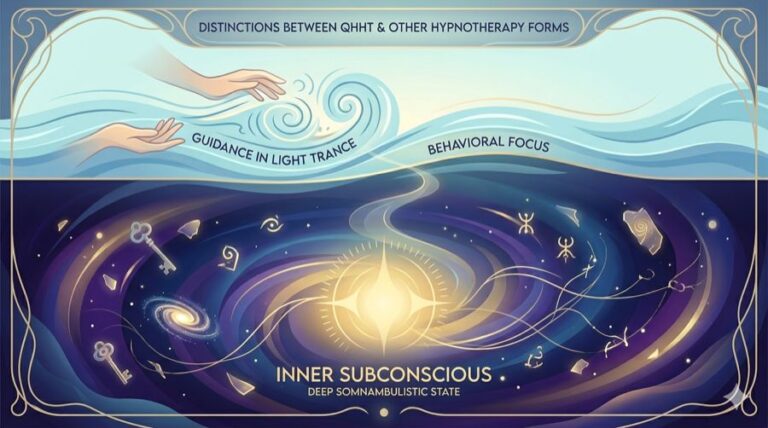
It is a fair question, and one I answer honestly. For some kinds of work, geography matters less. A shorter clinical hypnotherapy session focused on a specific behavioural target can often be done well with a practitioner closer to home. I have written about the differences between methods in a separate post.
For QHHT specifically, the longer session format and the depth of state involved make the setting matter more. A four to six hour session takes place in a particular room, in a particular village, within a particular landscape. That context is not neutral. Clients arriving from urban environments often comment on how much the transition into Laren contributed to their ability to drop into the work. The drive, in this sense, is not external to the session. It is its first hour.
The quality of the landscape
Laren sits in Het Gooi, a small region east of Amsterdam known for its heathland, forests, and a long cultural association with artists and contemplative living. I have written about this landscape separately. What matters for clients considering the travel is that it is not a generic suburb. The land itself has a slower quality, and that quality reaches you well before the session begins.
For people who live in cities, this is often the element they did not know they were missing. Clients arriving from central Amsterdam have sometimes described the fifteen minute difference between their apartment and my practice as feeling like a much longer journey, simply because the landscape changes so much. A brief overview of the region is kept by the regional tourism site if you want to see it before you come.
What returning clients tell me
Many of the clients I have seen for a second or third session returned partly because the setting was worth returning to. This is something I did not expect when I first set up the practice. I had assumed people would choose convenience. What I have seen is the opposite. Once clients have done a session in Laren, the association between the village and the depth of the work becomes strong enough that coming back is not only acceptable, it is preferred.
Something I often hear from returning clients is that they begin looking forward to the drive itself. The road becomes a kind of threshold, and the transition becomes a familiar one. In my experience, clients who have returned two or three times report settling into the state more quickly each time, partly because the drive and the landscape have already done part of the work. The room itself inherits some of this weight, too.
When the travel is too much
For clients living much further afield, particularly those travelling internationally, I sometimes suggest combining the session with one or two days in the area afterwards. Staying overnight in Laren or nearby, walking the heathland the following morning, giving the integration phase more space than a same-day flight allows. The region is modest and easy to stay in, and a short pause before returning home often strengthens the lasting benefit of the session. I have written about those integration hours.
For clients closer by, the same principle applies in miniature. The drive home is not the end of the work. A slower return route, through the Hilversum lanes or the quieter villages of Het Gooi, does more for the session than a direct highway ride. Clients who have taken this to heart report fuller integration and more stable after-effects in the weeks that follow.
The practical worth
If you are weighing whether the travel is worth it, I would gently suggest that the question contains its own answer. A session that you have travelled deliberately toward is already different from a session you have walked into from down the street. The effort is not friction. It is framing. Clients in Utrecht, Den Haag, Eindhoven and further afield have found the drive to Laren worthwhile not because the method would not work nearer home, but because the context in Het Gooi adds something the city cannot. That something is hard to describe until you have experienced it. Afterwards, it rarely needs explaining.